Amazon Echo Sub Review: What Beginners Need to Know
Standard smart speakers handle voice requests, alarms, and spoken podcasts with ease, yet their compact plastic frames frequently struggle to reproduce low-end audio notes. Anyone who enjoys bass-heavy tunes or cinematic rumbles…
By Rosa Harlow 8 min read


Our verdict
Scores are out of 10, based on listed specifications and buyer feedback — not from testing of our own
The Amazon Echo Sub is an effective addition for households already invested in the Alexa ecosystem that want fuller low-end audio for their favorite albums and media streams.
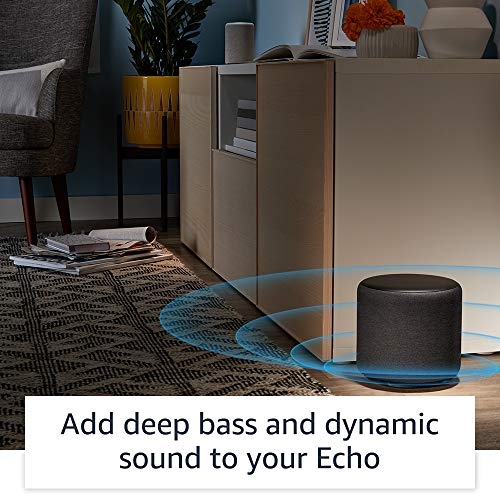
- Adds a dedicated downward-firing 6-inch woofer to take over demanding low-end frequencies.
- Pairs with one Echo device or two matching speakers for wide stereo separation.
- Integrates into home entertainment setups using a compatible Fire TV device and up to five compatible Echo speakers.
- Eliminates complex wiring harnesses thanks to simple wireless Alexa app pairing.
Where to buy
at Amazon Prime
Price taken from the listing on 18 Sep 2026 and it can change at any time. We may earn a commission if you buy through this link.
Pros
- Deep 30Hz bass from 6-inch down-firing woofer
- Sealed 4-liter enclosure delivers controlled sound
- Wireless pairing via standard Alexa smartphone app
- Supports stereo pairing with two matching Echoes
- Integrates with Fire TV for home theater
Cons
- Requires compatible Echo device to operate
- Cannot function as a standalone smart speaker
- Listing does not specify physical audio inputs
As Amazon Associates, we earn from qualifying purchases. This means we may receive a small commission at no extra cost to you if you click through and make a purchase.
Standard smart speakers handle voice requests, alarms, and spoken podcasts with ease, yet their compact plastic frames frequently struggle to reproduce low-end audio notes. Anyone who enjoys bass-heavy tunes or cinematic rumbles quickly notices that small desktop hardware delivers thin sound when pushed to louder volumes. The Amazon Echo Sub is designed to solve this problem for music fans and media lovers who already own Alexa hardware and want deeper low frequencies without replacing their entire household speaker system.
This dedicated companion speaker provides a focused low-end boost, working alongside existing hardware to take over sub-bass frequencies and let standard speakers focus on clear dialogue and upper musical notes. In short, it delivers a straightforward path to richer acoustic performance, provided your existing hardware matches the necessary pairing requirements.
Amazon Echo Sub Features Explained
Down-Firing Woofer and Acoustic Enclosure
The core of this dedicated subwoofer is a 6-inch downward-firing woofer enclosed within a 4-liter sealed acoustic chamber. Rather than pointing the speaker cone outward into the room, down-firing hardware directs low-frequency acoustic vibrations toward the floor surface. Because bass frequencies spread omnidirectionally through physical space, this physical arrangement allows the unit to disperse low notes evenly across the entire listening area without creating harsh directional hotspots.
The 4-liter sealed chamber plays an equally vital role in managing resonance. Sealed subwoofer enclosures keep the internal air volume contained, which provides natural acoustic damping against erratic cone movement. This design choice results in tight, controlled low-end notes rather than the loose or muddy rumbling that sometimes occurs with vented enclosures. For listeners evaluating amazon echo sub bass performance, this arrangement ensures that kick drums and bass guitars retain distinct timing and impact during playback.
Echo Sub Stereo Pair and Music Playback
While a standalone smart speaker produces sound from a single point in the room, the companion subwoofer supports two distinct grouping methods for personal audio. Listeners can connect the unit to a single compatible Echo to create an immediate 1.1 audio group, or combine it with two identical compatible units to form an echo sub stereo pair. In a stereo configuration, one tabletop speaker outputs the left audio channel, the second speaker outputs the right channel, and the subwoofer handles the low-frequency foundation.
Using the echo sub for music playback unburdens the mid-range speakers from having to replicate deep low notes. When full-range tabletop speakers do not have to move their small cones violently to generate sub-bass, vocals and acoustic instruments sound noticeably clearer and less congested. For casual music fans and dedicated listeners alike, this separation allows multi-layered songs to exhibit improved spatial width, making tracks sound as though they are originating from a wider acoustic stage rather than a single compact plastic cylinder.
Echo Sub for Home Theater Integration
Beyond standard music playback, Amazon engineered this low-end companion to integrate directly into living room visual media setups. Users can construct a dedicated echo sub for home theater configuration by linking the subwoofer with up to five compatible Echo speakers and a compatible Fire TV device. In this grouping, the connected Fire TV acts as the primary video source while directing audio signals wirelessly across the surrounding smart speaker array.
This layout offers a flexible alternative to traditional home audio gear for viewers who prefer wireless connectivity over running long speaker cables around their baseboards. While shoppers looking for traditional one-piece television sound solutions might consider a dedicated unit like the Fire TV Soundbar, integrating the subwoofer into an Echo speaker array provides physical separation between distinct audio channels. Low-frequency effects like cinematic explosions, vehicle engines, and musical scores gain tangible depth while the satellite speakers keep television dialogue crisp and intelligible.
Simple Wireless Setup and Alexa App Control
Traditional audio equipment often intimidates beginners because it requires analog patch cords, impedance matching, and complex receiver settings. The amazon echo sub setup bypasses physical signal cables completely by utilizing straightforward wireless synchronization managed directly through the Alexa smartphone application. Once the unit is plugged into a wall outlet, the user opens the mobile application on a Fire OS, Android, or iOS device to initiate device discovery and pair the hardware with existing room speakers.
This app-driven echo sub pairing guide approach ensures that anyone can integrate the hardware without prior audio engineering experience. Voice management remains fully intact after pairing, meaning you can adjust master volume, request playlists, or pause playback simply by speaking to the paired smart speaker. The mobile interface also provides basic acoustic adjustment sliders, allowing owners to dial in bass intensity depending on whether the unit sits on hardwood flooring, thick carpet, or a corner surface.
Adaptive Low-Pass Filter and Frequency Management
Handling bass frequencies properly requires separating the audio spectrum so that each speaker in your room receives the sounds it is physically built to reproduce. The Amazon Echo Sub features an adaptive low-pass filter with a crossover frequency range between 50 Hz and 200 Hz. A low-pass filter acts as an acoustic gatekeeper, allowing low-frequency notes to pass through to the 6-inch driver while blocking high and mid-frequency signals that would sound distorted through a large woofer.
The adaptive nature of this crossover means the internal electronics coordinate with your paired speakers to balance audio handoffs automatically. Low frequencies down to 30Hz (-6dB) are directed downward into the floor, while vocals, chimes, and guitar strums stay routed to the matched tabletop Echo units. This automatic frequency division prevents audio overlap, ensuring the entire system sounds unified rather than like mismatched speakers competing for the same acoustic space.
Specs
The following technical details represent the official manufacturer hardware specifications for the Amazon Echo Sub:
| Driver Configuration | 6-inch (152 mm) downward-firing woofer |
|---|---|
| Acoustic Chamber | 4-liter sealed enclosure |
| Low Frequency Response | 30 Hz (-6dB) |
| Crossover Frequency | 50 Hz – 200 Hz adaptive low-pass filter |
| Dimensions | 8.0 inches high by 8.3 inches diameter (202 mm x 210 mm) |
| Product Weight | 9.3 lbs (4.2 kg) |
| Power Supply | Auto-switching 100-240 V, 50-60 Hz AC universal input |
| App Compatibility | Fire OS, Android, and iOS operating systems |
As published by the manufacturer on the Amazon listing.
Buy it if
Best Use Cases
- Upgrading a single compatible room speaker into a full-range music station with enriched low-frequency bass.
- Creating a dedicated two-channel stereo pair with two identical Echo units for immersive living room album listening.
- Assembling a wireless multi-speaker television audio array alongside a compatible Fire TV streaming device.
- Providing low-distortion acoustic support in medium-sized living spaces without routing speaker wires across the floor.
Think twice if
Before You Buy
Before bringing this unit into your home, checking echo sub compatibility is an essential first step. The Amazon Echo Sub is strictly a companion speaker and cannot function as an independent smart assistant on its own; it does not feature an internal microphone array and requires at least one compatible Echo device to operate. Furthermore, while the listing confirms it pairs with one Echo device, two matching Echo devices for stereo sound, or up to five Echo speakers with a compatible Fire TV, the listing does not specify the exhaustive catalog of individual model generations that are supported. Buyers who rely on standalone displays like the Alexa Echo Show 11 or third-party streaming equipment should verify device generation compatibility through the Alexa app prior to purchase.
It is also worth noting hardware connections and physical placement limitations. The unit relies solely on wireless synchronization and an auto-switching AC universal power cable; the listing does not specify the inclusion of auxiliary audio cables, 3.5mm input jacks, or optical connections. Because of its 9.3-pound weight and downward-firing driver design, placing the subwoofer directly on a solid floor surface is recommended for optimal acoustic coupling. Shoppers seeking an all-in-one television solution without multiple separate satellite speakers might explore alternatives like the Fire TV Soundbar Plus, but those committed to expanding their Echo ecosystem will find the wireless setup straightforward.
Bottom Line
Deciding whether the echo sub is worth it comes down to how much you value low-end musical depth and how deeply you are already invested in the Alexa ecosystem. If your daily entertainment revolves around voice-controlled smart speakers that sound slightly thin during movie nights or bass-driven musical tracks, adding this 6-inch sealed subwoofer provides an immediate, palpable transformation in audio authority.
Because the unit handles sub-bass frequencies down to 30 Hz while leaving midrange and vocal clarity to your satellite Echo speakers, it elevates your everyday listening without introducing complicated wiring harnesses or confusing receiver menus. For Alexa households seeking richer sound, it remains a capable and focused companion audio upgrade.
FAQ
Can the Amazon Echo Sub work by itself as an independent smart speaker?
No, the subwoofer cannot function as a standalone smart speaker. It is built strictly as an audio companion component and requires wireless pairing with a compatible Echo speaker to play sound and receive voice commands.
How does the Echo Sub connect to other smart speakers in the home?
The unit connects entirely over a wireless network connection configured within the Alexa mobile app. Users simply connect the power cord, launch the app on an Android, iOS, or Fire OS device, and pair the subwoofer with their chosen compatible Echo devices.
Can you pair two different Echo speaker models with the Sub for stereo sound?
To establish a left-and-right stereo pair with the subwoofer, the listing states that you must pair it with two of the same compatible Echo devices. Mismatched speaker models cannot be combined into an official stereo pairing arrangement with the unit.
What kind of audio frequencies can this companion subwoofer produce?
According to the official amazon echo sub specs, the unit features a low frequency response reaching down to 30 Hz (-6dB) and employs an adaptive low-pass crossover filter operating between 50 Hz and 200 Hz.
Does the subwoofer include physical audio input ports for televisions or receivers?
The listing does not specify any physical audio inputs such as RCA, optical, HDMI, or 3.5mm auxiliary jacks. Audio signals are transmitted wirelessly from paired Echo speakers and compatible Fire TV devices.
Where to buy
at Amazon Prime
Price taken from the listing on 18 Sep 2026 and it can change at any time. We may earn a commission if you buy through this link.
More Audio
See the section


Get our picks by email
New reviews and the prices we spotted, once a week.