What Is Blade Diameter? A Guide for Table Saws Buyers (2026)
Understand blade diameter explained for table saws. We compare 10-inch, 7-1/4-inch, 6-1/2-inch, and 8-1/4-inch options based on published specifications.
By GaugeKit Editorial Team 8 min read
As Amazon Associates, we earn from qualifying purchases. This means we may receive a small commission at no extra cost to you if you click through and make a purchase.
As an Amazon Associate we earn from qualifying purchases. Links on this page are affiliate links.
Blade Diameter Explained for Table Saws
Blade diameter explained is the first step in understanding table saw capacity. This measurement defines the size of the circular cutting tool. It determines the maximum depth of cut you can achieve in a single pass. It also influences the amount of material you can remove from the top of a workpiece. The diameter is measured across the center of the blade, from one tip to the opposite tip. You will see this number listed clearly on product specifications and packaging. Most table saws use a standard 10-inch blade. This size offers a good balance of cutting depth and speed. It allows you to cut through most standard lumber without difficulty. Some compact or portable saws use smaller blades. You might encounter a 7-1/4 inch blade on job-site saws. These are lighter and easier to handle but offer less depth. A 6-1/2 inch blade is even smaller, often found on very compact models. An 8-1/4 inch blade sits between the standard and the small options. It provides slightly more depth than the 7-1/4 inch but less than the 10-inch. Why does this matter to you? If you need to cut thick hardwood or deep joinery, a larger diameter is essential. A 10-inch blade can typically cut about 3-1/8 inches deep at a 90-degree angle. Smaller blades cut less. This limits the thickness of stock you can handle. Larger blades also tend to run at lower speeds for the same motor power. This can affect the finish quality of your cuts. However, they generally provide more torque and smoother operation in dense materials. When you compare saws, check the blade diameter first. It sets the baseline for what the machine can do. It is a fixed specification that rarely changes. You cannot easily swap a 10-inch blade for a 7-1/4 inch one without modifying the arbor and guards. Therefore, choose the diameter that matches your typical projects. If you mostly build furniture from standard boards, a 10-inch saw is the practical choice. If you do light framing on site, a smaller saw may be more convenient. The diameter dictates the tool's primary capabilities.
Choosing Your Blade Diameter Size
10-Inch
A 10-inch blade is the standard for most jobsite table saws. This size offers a good balance between cutting depth and portability. You get a maximum cut depth that handles most lumber and sheet goods. The SKIL TS6307 and DEWALT DWE7491RS use this size. They provide stable performance for accurate rip cuts. This diameter suits contractors who need versatility on site. It is heavier than smaller blades but cuts deeper. You lose some compactness for greater cutting capacity.
8-1/4-Inch
An 8-1/4-inch blade reduces the overall weight and footprint of the saw. This makes the tool easier to transport daily. The DEWALT DWE7485 and DWE7485WS feature this diameter. They are ideal for contractors moving equipment frequently. You gain portability but lose some cutting depth. This size is sufficient for standard sheet goods ripping. The RYOBI PBLTS01B also uses this blade size. It fits users who prioritize a compact base. You trade maximum depth for better maneuverability on tight jobsites.
7-1/4 Inch
This size is less common for full-size jobsite table saws. It typically appears in compact or handheld circular saws. If found on a table saw, it indicates a very small footprint. You get minimal cutting depth with this diameter. It is suitable only for very light duty work. Most professional jobsite saws stick to 8-1/4 or 10 inches. You should verify if this size meets your depth requirements. It is not the standard for robust contractor tools. Check your specific cutting needs before assuming this is the right choice.
6-1/2 Inch
A 6-1/2-inch blade is very small for a table saw. It is typically found in mini or benchtop saws. You get very limited cutting depth with this option. This size is not suitable for standard construction lumber. It is best for small hobby projects or trim work. The Evolution R10TS uses a 10-inch blade, not this size. You should avoid this diameter for serious jobsite work. It restricts your ability to rip thick materials. Most buyers prefer larger diameters for better versatility and power.
Is Blade Diameter Worth Your Attention?
Who needs it
You need to focus on blade diameter if your projects involve thick hardwoods or deep joinery. A 10-inch blade allows for a maximum cut depth of approximately 3-1/4 inches at 90 degrees. This capacity is essential when ripping wide boards or cutting through dense materials in a single pass. If you frequently work with 4×4 posts or thick plywood sheets, this depth matters. The 8-1/4-inch option offers a middle ground, providing slightly more depth than smaller blades while remaining lighter. You should prioritize this spec when your workbench space is limited but you still require substantial cutting power. The difference between 7-1/4-inch and 10-inch blades is significant for structural lumber. Choose the larger diameter if you want versatility without switching blades often. It handles the bulk of standard carpentry tasks with ease.
Who can skip it
You can ignore blade diameter if you only perform light trimming or shallow cuts. A 7-1/4-inch blade is sufficient for cutting standard 2x4s and thin sheet goods. If your work is mostly in a workshop with ample space, portability might be less critical than weight. The 6-1/2-inch blade is often found in compact tools designed for tight spaces. You might prioritize motor speed or dust collection features over blade size if you are doing fine woodworking. These smaller diameters are lighter and easier to handle for quick adjustments. Focus on table extension size or fence accuracy instead. They impact your workflow more than the slight difference in cut depth. If you do not cut material thicker than 2 inches often, the larger blades offer no practical advantage for your daily tasks.
Table Saw Blade Terms
Blade Diameter
The distance across the circular cutting tool. This measurement sets the maximum depth of cut and influences the saw’s overall capacity for thick materials.
Maximum Cut Depth
The deepest vertical distance the blade can penetrate the workpiece. A 10-inch blade typically allows a cut depth of about 3-1/4 inches at 90 degrees.
90-Degree Cut
A standard vertical cut made when the blade is perpendicular to the table surface. This orientation usually provides the maximum cutting depth for the tool.
Jobsite Table Saw
A portable saw designed for construction sites. These often use 10-inch blades to balance cutting capacity with the need for easy transport and setup.
Sheet Goods
Large panels like plywood or MDF used in construction. A standard 10-inch blade diameter provides sufficient depth to cut through most common sheet good thicknesses.
Hardwoods
Dense wood types like oak or maple. Thick hardwoods require a blade with enough diameter to achieve the necessary cut depth without binding.
Ripping
Cutting wood along its grain to reduce width. This process often requires a blade that can handle the full thickness of the stock in one pass.
Joinery
Techniques for connecting wood pieces, such as mortise and tenon. Deep joinery often demands the maximum cut depth available from a larger blade diameter.
| # | Product | Best for | Price |
|---|---|---|---|
| 1 | SKIL 10-Inch 15-Amp Jobsite Table Saw with Stand | accurate rip cuts on jobsites | |
| 2 | DEWALT 8-1/4-Inch Compact Jobsite Table Saw | portable jobsite use with accurate fencing | |
| 3 | DEWALT 10-Inch Table Saw with Rolling Stand | Contractors needing stable 10-inch cutting on site | |
| 4 | DEWALT 8-1/4-Inch Table Saw with Stand | contractors needing portable sheet goods ripping | |
| 5 | Evolution 10-Inch Multi-Material Jobsite Table Saw | Multi-material cutting with 26-inch rip capacity | |
| 6 | RYOBI 18V Brushless 8-1/4-Inch Table Saw | Precision cuts with a steel frame |
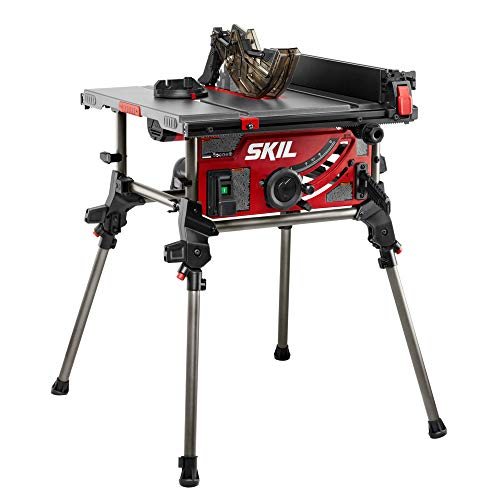
SKIL 10-Inch 15-Amp Jobsite Table Saw with Stand
Best for: accurate rip cuts on jobsites
- Blade Diameter
- 10-Inch
- Motor Power
- 15 Amp
- Fence System
- Rack and pinion
- Stand Type
- Folding stand
- Application
- Jobsite
- Dimensions
- 1 × 1 × 1 inches
This SKIL TS6307 is a 15 Amp jobsite table saw with a 10-inch blade. It features a rack and pinion fence system for parallel alignment and a folding stand for portability. The saw cuts up to 4×4 material at 90 degrees and offers a 2-47 degree bevel capacity. Weighing 51.2 pounds, it suits contractors who need accurate rip cuts and easy transport on site.
- Rack and pinion fence rails ensure parallel alignment
- Integrated folding stand aids portability
- Cuts 4×4 material at 90 degrees
- 2-47 degree bevel capacity with quick release lever
- Heavier build at 51.2 pounds compared to compact alternatives
- Fixed 2-47 degree bevel range limits extreme angle cuts
- You need a 10-inch blade for deep rip cuts
- You value fence accuracy on a jobsite
- You require a folding stand for transport
- You prefer a lighter tool under 40 pounds
- You need a 12-inch blade for larger stock
- You require a zero-clearance throat plate
Verdict: SKIL TS6307 10-Inch Jobsite Table Saw delivers precise rack and pinion alignment for contractors who prioritize cut accuracy and durable portability over ultra-light weight.

DEWALT 8-1/4-Inch Compact Jobsite Table Saw
Best for: portable jobsite use with accurate fencing
- Blade Diameter
- 8-1/4-Inch
- Rip Capacity
- 24.5 in.
- Motor Power
- 15 Amp
- Fence System
- Rack & pinion
- Application
- Jobsite
- Form Factor
- Portable
This DEWALT DWE7485 is a 15 Amp jobsite table saw with an 8-1/4 inch blade diameter. It offers 24.5 inches of rip capacity, allowing you to handle standard 4×8 sheets. The rack and pinion fence ensures accurate adjustments. Its 54-pound weight and compact dimensions make it portable for site work. The metal roll cage base adds durability for tough environments.
- 15 Amp motor provides consistent power for cutting tasks.
- Rack and pinion fence rails allow for fast, smooth adjustments.
- 24.5 inch rip capacity accommodates full 4×8 sheets.
- Metal roll cage base enhances jobsite durability.
- On-board storage keeps guards and wrenches organized.
- 8-1/4 inch blade diameter cuts less deep than 10-inch models.
- 54 pound weight is heavier than smaller portable options.
- 24.5 inch rip capacity is smaller than 26+ inch designs.
- You need a portable saw for frequent jobsite transport.
- You require accurate fence adjustments via rack and pinion rails.
- You want a durable metal base for rough conditions.
- You need to cut thicker stock than 8-1/4 inch allows.
- You prefer a lighter tool under 50 pounds.
- You require a rip capacity greater than 24.5 inches.
Verdict: DEWALT 15 Amp 8-1/4 in. Jobsite Saw suits contractors who prioritize fence accuracy and base durability over maximum cutting depth. It fits users who move equipment frequently but need robust performance on site.
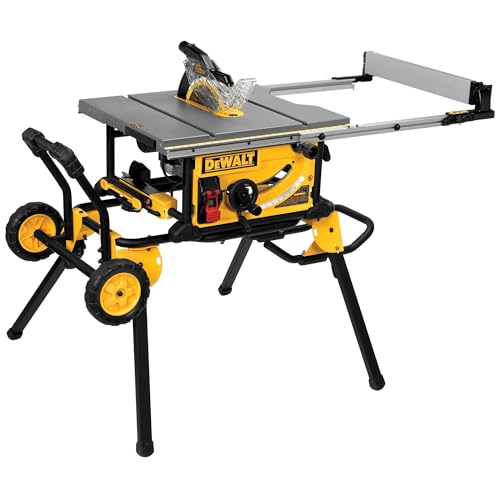
DEWALT 10-Inch Table Saw with Rolling Stand
Best for: Contractors needing stable 10-inch cutting on site
- Blade Diameter
- 10-Inch
- Rip Capacity
- 32-1/2-Inch
- Motor Power
- 15 Amp
- Fence System
- Rack & Pinion
- Stand Type
- Foldable Rolling Stand
- Dimensions
- 12.2 × 9.65 × 12.2 inches
This 10-inch table saw delivers 15-amp power at 4,800 RPM for hardwood ripping. It features a 32-1/2-inch rip capacity and a rack-and-pinion fence for smooth adjustments. The included foldable rolling stand adds stability and portability. You get a 2-1/2-inch dust port and onboard storage. It suits jobsites needing a full-size cut with a mobile base.
- 15-amp motor provides 4,800 RPM for fast ripping
- 32-1/2-inch rip capacity handles large shelving materials
- Rack-and-pinion fence system ensures smooth, accurate adjustments
- Foldable rolling stand offers excellent stability and portability
- Onboard storage keeps blade guard and wrenches accessible
- 110-pound weight makes it heavier than compact 8-1/4-inch alternatives
- 32-1/2-inch rip capacity is smaller than some 10-inch stationary models
- 2-1/2-inch dust port is smaller than standard 4-inch shop vac ports
- You need a 10-inch blade for deeper cuts than 8-1/4-inch saws allow
- You want a rolling stand to simplify transport between job sites
- You require a rack-and-pinion fence for precise rip cuts
- You prefer a lighter tool under 80 pounds for frequent carrying
- You need a rip capacity exceeding 32 inches for wide panels
- You want a standard 4-inch dust collection port for shop vacs
Verdict: DEWALT 10-Inch Jobsite Table Saw with Stand combines a 15-amp motor with a 32-1/2-inch rip capacity in a mobile package. It fits contractors who prioritize fence accuracy and stability over minimal weight.

DEWALT 8-1/4-Inch Table Saw with Stand
Best for: contractors needing portable sheet goods ripping
- Blade Diameter
- 8-1/4-Inch
- Rip Capacity
- 24.5 in.
- Fence System
- Rack and pinion
- Form Factor
- Portable
- Dimensions
- 26.5 × 17.1 × 26.8 inches
- Weight
- 66 pounds
The DEWALT DWE7485WS is a portable table saw featuring an 8-1/4-inch blade diameter. It offers 24.5 inches of rip capacity, allowing you to handle standard 4×8 sheets of plywood or OSB. The unit weighs 66 pounds and includes a rack and pinion fence system for precise adjustments. This model suits buyers who need a compact, 15-amp saw that balances portability with sufficient cutting width for general construction tasks.
- 8-1/4-inch blade diameter for versatile cutting
- 24.5-inch rip capacity for full sheet goods
- Rack and pinion fence rails for smooth adjustments
- Blade Brake technology for safety
- Heavier at 66 pounds compared to lighter compact models
- Smaller 8-1/4-inch blade limits depth of cut versus 10-inch options
- 24.5-inch rip capacity is narrower than full 50-inch tables
- You need to carry the saw to job sites regularly
- You frequently rip 4×8 sheets of plywood or OSB
- You prefer a rack and pinion fence for accuracy
- You require a 10-inch blade for deeper cuts
- You need a rip capacity exceeding 24.5 inches
- You want a lighter unit under 50 pounds
Verdict: DEWALT 8-1/4 Inch Portable Table Saw fits contractors who prioritize a compact footprint and reliable fence accuracy over maximum cutting depth. It serves those who transport tools daily and need to rip standard sheet goods efficiently.

Evolution 10-Inch Multi-Material Jobsite Table Saw
Best for: Multi-material cutting with 26-inch rip capacity
- Blade Diameter
- 10-Inch
- Rip Capacity
- 26 in
- Motor Power
- 15 A
- Fence System
- Rack and pinion
- Amperage
- 15 Amp
- Intended Use
- Woodworking
The Evolution R10TS is a 10-inch jobsite table saw built for multi-material cutting. Its 15-amp motor handles wood, steel, and aluminum. The 26-inch rip capacity and rack-and-pinion fence system ensure precision. It includes a zero-clearance throat plate and dado plate for versatility. This portable saw suits professionals needing durable, repeatable cuts on site.
- 15-amp motor with soft start for high torque
- 26-inch rip capacity for wide materials
- Rack and pinion fence system for accuracy
- Includes zero-clearance throat plate and dado plate
- Electronic blade brake for improved safety
- 29-inch width is bulkier than compact 8-1/4-inch models
- 15-inch height limits portability compared to lighter units
- No rolling stand included in base configuration
- You cut metal or composite materials alongside wood
- You need a 26-inch rip capacity for wide stock
- You require a zero-clearance plate for clean edges
- You need a built-in rolling stand for transport
- You prioritize a compact footprint under 25 inches
- You only cut wood and prefer lighter tools
Verdict: Evolution R10TS 10-Inch Jobsite Table Saw fits contractors who cut steel and aluminum. It delivers precision with a 26-inch rip capacity and rack-and-pinion fence. It is not for those needing a rolling stand.

RYOBI 18V Brushless 8-1/4-Inch Table Saw
Best for: Precision cuts with a steel frame
- Blade Diameter
- 8-1/4-Inch
- Rip Capacity
- 12 in.
- Voltage
- 18V
- Fence System
- Adjustable self-aligning
- Motor Type
- Brushless
- Dimensions
- 20 × 12 × 24 inches
The RYOBI 18V ONE+ HP Brushless 8-1/4" Table Saw offers corded-like performance in a portable design. It features a steel frame and a 12-inch rip capacity right of the blade. The brushless motor spins up to 4,500 RPM for fast cuts. You get accurate depth control via a rack and pinion adjustment. This tool suits users who want durable construction and precise cuts without a power cord.
- Brushless motor delivers up to 4,500 RPM
- 12-inch rip capacity right of the blade
- Steel frame provides added durability
- Rack and pinion adjustment for accurate depth control
- 8-1/4-inch blade diameter cuts less material than the 10-inch options on this list
- Requires 18V batteries for operation, adding weight and setup time compared to corded models
- You need a portable saw with a durable steel frame
- You want a 12-inch rip capacity for wider boards
- You prefer the precision of a rack and pinion fence system
- You require a 10-inch blade for deeper cutting capacity
- You want a corded tool that plugs directly into a wall outlet
- You need a saw with a larger 24-inch or greater rip capacity
Verdict: RYOBI 8-1/4" Brushless Table Saw is a solid choice for users who prioritize a steel frame and precise rack and pinion adjustments. It fits those who need a 12-inch rip capacity and are comfortable using 18V batteries for portable power.
Specifications side by side
| Spec | SKIL 10-Inch 15-Amp Jobsite Table Saw with Stand | DEWALT 8-1/4-Inch Compact Jobsite Table Saw | DEWALT 10-Inch Table Saw with Rolling Stand | DEWALT 8-1/4-Inch Table Saw with Stand | Evolution 10-Inch Multi-Material Jobsite Table Saw | RYOBI 18V Brushless 8-1/4-Inch Table Saw |
|---|---|---|---|---|---|---|
| Blade Diameter | 10-Inch | 8-1/4 in. | 10 Inch | 8-1/4 inch | 10 in | 8-1/4" |
| Rip Capacity | – | 24.5 in. | 32-1/2-Inch | 24.5 in. | 26 in | 12 in. |
| Motor Power | 15 Amp | 15 Amp | 15 Amp | – | 15 A | – |
| Voltage | – | – | – | – | – | 18V |
| Fence System | Rack and pinion | Rack & pinion | Rack & Pinion | Rack and pinion | Rack and pinion | Adjustable self-aligning |
| Stand Type | Folding stand | – | Foldable Rolling Stand | – | – | – |
| Chuck Size | – | – | 1/2 Inch | – | – | – |
| Motor Type | – | – | – | – | – | Brushless |
| Amperage | 15 Amp | 15 Amp | 15 Amp | – | 15 Amp | – |
| Intended Use | – | – | – | – | Woodworking | – |
| Application | Jobsite | Jobsite | – | – | Jobsite | – |
| Form Factor | – | Portable | – | Portable | Portable | – |
| Dimensions | 1 × 1 × 1 inches | 22.8 × 22.8 × 13 inches | 12.2 × 9.65 × 12.2 inches | 26.5 × 17.1 × 26.8 inches | 29 × 29 × 15 inches | 20 × 12 × 24 inches |
| Weight | 51.2 pounds | 54 pounds | 110 pounds | 66 pounds | – | – |
| Size | 10'' | One Size | One Size | One Size | 10 in | – |
| Color | 10" Table Saw | Yellow | Yellow/Black/Silver Table Saw/Stand | Yellow/Black | Orange | Green |
| Model | TS6307-00 | DWE7485 | DWE7491RS | DWE7485WS | R10TS | PBLTS01B |
Frequently asked questions
Does a larger blade diameter mean a deeper cut?
Yes. A larger blade diameter directly increases the maximum cut depth. For example, a 10-inch blade allows for a deeper vertical penetration than an 8-1/4-inch blade. This matters when you need to rip thick hardwoods or deep joinery. The SKIL TS6307 uses a 10-inch blade for this increased capacity.
What is the difference between a 10-inch and 8-1/4-inch saw?
The main difference is cutting depth and portability. A 10-inch saw, like the DEWALT DWE7491RS, offers greater depth but weighs significantly more. An 8-1/4-inch saw, such as the DEWALT DWE7485, is lighter and more compact. You choose the smaller blade for easier transport on busy jobsites.
Can an 8-1/4-inch blade handle standard sheet goods?
Yes. An 8-1/4-inch blade provides sufficient capacity for standard sheet goods. The DEWALT DWE7485WS is designed for contractors who need to rip these materials efficiently. While the cut depth is less than a 10-inch blade, it remains practical for most common construction and carpentry tasks.
Do all 10-inch table saws come with a stand?
No. Some models, like the SKIL TS6307, include a stand for immediate use. Others, such as the DEWALT DWE7491RS, are sold with a rolling stand for stability. You must check the specific product details to see if a stand is included. This affects the total weight and setup time on site.
Is a brushless motor better for blade performance?
A brushless motor offers efficiency and durability, but it does not change the blade diameter. The RYOBI PBLTS01B uses an 8-1/4-inch blade with a brushless motor. This combination provides precise cuts and a steel frame. The motor type affects runtime and maintenance, not the physical cutting capacity of the blade.
Why would I choose a 6-1/2-inch blade?
A 6-1/2-inch blade is typically found in compact or specialty saws. It offers the shallowest cut depth among the options listed here. This size is best for very light-duty work or tight spaces where a larger saw cannot fit. It sacrifices depth for extreme portability.
See also
Where to buy
at Amazon
Price taken from the listing when this page was written and it can change at any time. We may earn a commission if you buy through this link.
More Table Saws
See the section


Get our picks by email
New reviews and the prices we spotted, once a week.