Horsepower in Table Saws: What It Is and Is It Worth It?
Horsepower explained for 6 table saws. Compare motor specs from 1 to 3 HP to find the right power for your cutting needs.
By GaugeKit Editorial Team 8 min read
As Amazon Associates, we earn from qualifying purchases. This means we may receive a small commission at no extra cost to you if you click through and make a purchase.
As an Amazon Associate we earn from qualifying purchases. Links on this page are affiliate links.
Understanding Horsepower in Table Saws
Horsepower is a unit of power that measures how much work a motor can do over time. In table saws, this spec tells you the strength of the motor driving the blade. You will see values like 1 HP, 1.5 HP, 1.75 HP, 2 HP, 2-1/4 HP, and 3 HP on product listings. These numbers indicate the continuous power output available to cut wood.
The concept is simple. Higher horsepower means the motor can handle more resistance. When you push dense hardwoods through a thick blade, the motor fights against the friction. A stronger motor maintains its speed under load. A weaker motor might slow down or stall. This is why horsepower explained is critical for serious woodworkers. It defines the limits of your machine.
Manufacturers label this spec on the motor nameplate or in the technical specifications. You might see continuous horsepower or peak horsepower. Continuous horsepower is the sustained output during operation. Peak horsepower is the maximum burst available for short moments. Most buyers should focus on continuous ratings. These numbers reflect real-world cutting performance.
Why do you care? If you only cut softwoods or thin plywood, a 1 HP or 1.5 HP saw works fine. These motors are lighter and often cheaper. However, if you cut hardwoods like oak or maple, or make thick cuts, you need more power. A 2 HP or 3 HP motor handles these tasks without strain. The 2-1/4 HP option sits in the middle, offering a balance of power and size.
Choosing the right rating depends on your material. Heavy-duty projects require robust motors. Light DIY tasks do not. Always check the horsepower spec before buying. It ensures your saw can handle your intended work without overheating or stalling. This spec is a key indicator of capability and durability in power tools.
Comparing Table Saw Horsepower Options
1 HP
This is the lowest power tier in the comparison. You will rarely see this spec in modern cabinet saws. It typically appears in compact or older models. The motor struggles with thick hardwoods or deep cuts. You should avoid this for production work. It is suitable only for light, occasional use on softwoods. The trade-off is lower cost and smaller size, but you sacrifice cutting ability. Most professionals consider this insufficient for serious woodworking tasks.
1.5 HP
This level offers a balance of power and portability. You get enough torque for most general woodworking tasks. It handles medium-density woods well without bogging down. This spec is common in contractor and hybrid saws. You benefit from a lighter machine that is easier to move. The trade-off is slightly less reserve power for dense hardwoods compared to higher ratings. The SawStop Jobsite Saw PRO uses this rating. It suits users who prioritize safety features and mobility over raw cutting speed.
1.75 HP
This is a very common rating for cabinet saws. You get strong torque that handles most hardwoods with ease. It provides a good balance between power and motor longevity. This spec is found in many professional-grade stationary saws. You benefit from smooth cuts in thick materials. The trade-off is that it is still lighter than 3 HP models, so it may vibrate more under heavy load. Examples include the JET ProShop II and Powermatic 10-Inch Table Saw. This is a solid choice for dedicated home workshops.
2 HP
This rating offers a noticeable step up in torque. You can cut through dense hardwoods more confidently. The motor maintains speed better under heavy load. This spec is often found in jobsite saws that need extra power. You benefit from faster feed rates and cleaner cuts. The trade-off is usually a heavier unit that requires more stable support. The SawStop Jobsite Saw PRO is listed with this rating. It suits professionals who need portability but cannot sacrifice cutting performance for weight savings.
2-1/4 HP
This specific rating bridges the gap between standard and heavy-duty. You get significant torque for demanding tasks. It is less common than whole-number ratings. This spec often appears in high-end contractor or hybrid saws. You benefit from enhanced cutting capability without the full footprint of a cabinet saw. The trade-off is potentially higher cost and complexity. This rating ensures you have enough reserve power for difficult cuts. It is ideal for users who need more than 2 HP but do not require a full cabinet saw.
3 HP
This is the highest power tier in this guide. You get maximum torque for the most demanding cuts. It handles thick hardwoods and production work with ease. This spec is found in heavy cabinet saws. You benefit from the smoothest operation and least bogging. The trade-off is significant weight, size, and power requirements. You often need 230V power for these machines. The SawStop Professional and Jet Deluxe XACTA use this rating. This suits serious woodworkers who prioritize cutting power and stability above all else.
When Horsepower Matters Most
Who needs it
You need higher horsepower if you cut dense hardwoods like oak or maple regularly. Motors with 2 HP or more handle thick stock without bogging down. The 3 HP option is ideal for heavy production work or ripping large sheets of plywood repeatedly. If you often make deep cuts, the extra torque keeps the blade spinning at speed. This reduces burn marks and ensures cleaner edges. You should choose the 1.75 HP or 2-1/4 HP models if you do a mix of light and moderate work. They provide enough power for most DIY projects without the bulk of industrial machines. Higher horsepower also helps when using dado stacks, which put extra strain on the motor. If your work involves continuous cutting, the robust motor prevents overheating and extends the life of your tool. It is a practical choice for serious woodworkers who prioritize performance and consistency.
Who can skip it
You can skip high horsepower if you only cut softwoods or thin materials. The 1 HP or 1.5 HP motors are sufficient for basic furniture building or light repairs. You will not notice a difference in cut quality with these lower specs. Instead of focusing on motor strength, prioritize blade quality and fence accuracy. A sharp blade makes a cleaner cut than a powerful motor does. You should also look at the table size and stability for better support. If you use the saw occasionally, the extra power is unnecessary expense and weight. Compact saws with lower HP are easier to store and move. Focus on safety features and ease of use rather than raw power. Your projects will not suffer if you choose a less powerful tool. The key is matching the saw to your actual material thickness and cutting frequency. Simple tasks do not require industrial strength.
Table Saw Glossary Terms
Horsepower
A unit measuring motor strength. Higher values indicate more power for cutting thick or dense materials without slowing down. Typical values range from 1 to 3 HP.
Voltage
The electrical pressure powering the motor. Most table saws use 120V for home use. Industrial models often require 240V for consistent performance under heavy loads.
Blade Diameter
The size of the cutting wheel. A 10-inch blade is standard for most saws. Larger diameters allow for deeper cutting depths and wider kerf cuts.
Motor Type
The design of the internal mechanism. Universal motors are lighter but noisier. Induction motors offer smoother operation and longer life for continuous heavy-duty work.
Chuck Size
The maximum diameter a tool can hold. This spec is critical for drill drivers and impact wrenches. Common sizes include 3/8-inch and 1/2-inch for various bits.
Battery Capacity
The energy storage measured in Amp-hours. Higher numbers provide longer runtime between charges. A 5.0 Ah battery typically lasts longer than a 2.0 Ah version.
Kit Size
The number of tools included in a package. Kits often bundle a drill, impact driver, and accessories. This setup reduces the need to buy individual tools separately.
Included Tools
The specific items provided in the box. Buyers should check for extras like batteries, chargers, or carrying cases. This determines the immediate usability of the purchase.
| # | Product | Best for | Price |
|---|---|---|---|
| 1 | JET ProShop II 10-Inch Table Saw with Steel Wings | Users needing 30-inch rip capacity on 120V power | |
| 2 | SawStop Jobsite Saw PRO with Mobile Cart | jobsite safety and accuracy | |
| 3 | SawStop Professional 3 HP Cabinet Saw with 52-Inch Rip | Heavy-duty precision cutting in fixed shops | |
| 4 | SawStop 10-Inch 1.75 HP Cabinet Saw with 36-Inch Fence | Safety-focused cabinet saw users | |
| 5 | Jet 10-Inch Table Saw with 30-Inch Rip | High-power production cutting with wide materials | |
| 6 | Powermatic 10-Inch 1.75 HP Table Saw | workshops needing 30-inch rip capacity |

JET ProShop II 10-Inch Table Saw with Steel Wings
Best for: Users needing 30-inch rip capacity on 120V power
- Horsepower
- 1.75 HP
- Blade Diameter
- 10-Inch
- Rip Capacity
- 30-Inch
- Motor Power
- 1-3/4 HP
- Voltage
- 120V
- Dimensions
- 60 × 40 × 43 inches
This 10-inch table saw delivers 1.75 HP of motor power. It offers a 30-inch rip capacity for wide boards. The unit weighs 236 pounds and measures 60 inches long. Its 120V single-phase motor suits standard workshop outlets. You get a magnetic paddle switch and quick-release riving knife. This saw fits users who need solid power and a generous rip range in a stationary setup.
- 1.75 HP motor provides strong cutting torque
- 30-inch rip capacity handles wide stock easily
- 120V single-phase operation fits standard outlets
- Magnetic paddle switch ensures safe one-hand operation
- Quick-release riving knife simplifies blade changes
- 1.75 HP is lower than the 3 HP options on this list
- 236-pound weight makes the saw difficult to move without assistance
- 60-inch length requires significant floor space for setup
- You need a 30-inch rip capacity for wide lumber
- You prefer a 120V single-phase power connection
- You want a stationary saw with a magnetic paddle switch
- You require more than 1.75 HP for heavy-duty production work
- You need a portable saw that fits in a truck bed
- You want a saw with a 3 HP motor for maximum speed
Verdict: JET ProShop II 10-Inch Table Saw suits users who prioritize a 30-inch rip range and standard 120V power. It is a solid choice for workshops where space allows for its 236-pound footprint.
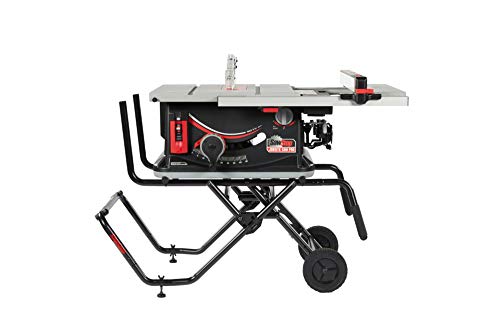
SawStop Jobsite Saw PRO with Mobile Cart
Best for: jobsite safety and accuracy
- Horsepower
- 2 HP
- Motor Power
- 1 1/2 HP
- Voltage
- 120V
- Stand Type
- Mobile Cart Assembly
- Application
- Jobsite
- Dimensions
- 48 × 29 × 36 inches
This 1.5 HP jobsite saw offers 120V power on a mobile cart. It features a 24 5/8-inch table depth for large cuts and a one-turn elevation system. The unit includes a patented flesh-detection safety system. At 113 pounds, it is portable but substantial. It suits contractors needing safety and accuracy on site.
- 1.5 HP motor for jobsite power
- Patented flesh-detection safety system
- 24 5/8-inch table depth
- One-turn blade elevation system
- Mobile cart assembly included
- 1.5 HP is lower than the 2 HP and 3 HP options on this list
- 113-pound weight is heavier than lighter jobsite competitors
- 120V input limits use on 230V circuits
- You need the SawStop safety system for skin protection
- You work on jobsites requiring 120V power
- You prioritize table depth for large cut accuracy
- You require more than 1.5 HP for heavy-duty ripping
- You need 230V power for higher torque
- You want a lighter unit for frequent carrying
Verdict: SawStop Jobsite Saw PRO 1.5 HP fits professionals who value the patented safety system and a deep table over raw horsepower. It is ideal for jobsites where 120V power is standard.

SawStop Professional 3 HP Cabinet Saw with 52-Inch Rip
Best for: Heavy-duty precision cutting in fixed shops
- Horsepower
- 3 HP
- Motor Power
- 3 HP
- Fence System
- T-Glide
- Dimensions
- 85.3 × 31.1 × 34 inches
This cabinet saw delivers 3 HP of motor power for heavy-duty cutting tasks. It features a 52-inch T-Glide rip fence system designed for accuracy and ease of use. The unit measures 85.3 inches in length and 31.1 inches in width. Its robust build supports professional-level performance. You will appreciate the integrated safety system that stops the blade on contact. This tool suits users needing high power and precision in a stationary setup.
- 3 HP motor provides high cutting power
- 52-inch T-Glide rip fence ensures accuracy
- Integrated safety system stops blade on skin contact
- 85.3-inch length requires significant floor space
- 31.1-inch width demands a wide workspace
- You need maximum cutting power for thick hardwoods
- You require a highly accurate rip fence system
- You have a dedicated shop with ample floor space
- You have limited workshop floor space
- You need a portable jobsite saw
- You prefer a smaller footprint for storage
Verdict: SawStop 3 HP Cabinet Saw offers top-tier power and precision for serious woodworkers. It fits users with ample space who prioritize cutting accuracy and safety.
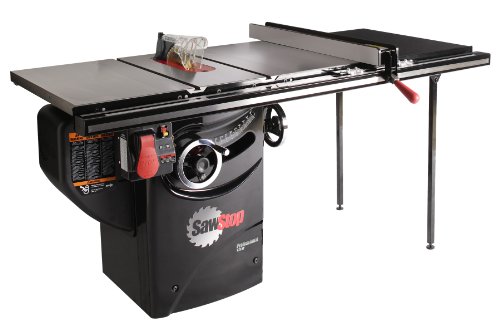
SawStop 10-Inch 1.75 HP Cabinet Saw with 36-Inch Fence
Best for: Safety-focused cabinet saw users
- Horsepower
- 1.75 HP
- Blade Diameter
- 10-Inch
- Motor Power
- 1.75-HP
- Fence System
- T-Glide
- Dimensions
- 39.1 × 33 × 34 inches
- Weight
- 471 pounds
This SawStop cabinet saw features a 1.75 HP motor and a 10-inch blade. It includes a 36-inch T-Glide fence made of heavy-gauge steel. The trunnion and arbor are built for precision. A gas piston elevation allows for smooth adjustments. Table flatness is measured at 0.010 inches maximum gap. This tool suits users who need reliable square cutting and advanced safety systems.
- 1.75 HP motor provides steady power
- 36-inch T-Glide fence ensures reliable square cutting
- Patented safety system stops the blade in less than 5 milliseconds
- Gas piston elevation delivers smooth adjustability
- 1.75 HP motor is lower than the 3 HP options on this list
- 471 pounds weight makes it significantly heavier than other models here
- 36-inch fence is shorter than the 52-inch options available
- You prioritize blade safety technology in your shop
- You need a heavy-gauge steel fence for precise cuts
- You have space for a 471-pound cabinet saw
- You require a motor with 3 HP or more
- You need a fence that extends beyond 36 inches
- You prefer a lighter saw for easier transport
Verdict: Sawstop PCS175 1.75 HP Cabinet Saw fits professionals who value safety and fence stability over raw horsepower. Its heavy build and advanced stopping system make it ideal for a fixed workshop.

Jet 10-Inch Table Saw with 30-Inch Rip
Best for: High-power production cutting with wide materials
- Horsepower
- 3 HP
- Blade Diameter
- 10"
- Rip Capacity
- 30"
- Motor Power
- 3 HP
- Voltage
- 230V
- Fence System
- T-square
This JET table saw delivers 3 HP of motor power, the highest output in this guide. It features a 30-inch rip capacity and a 230V single-phase motor. The heavy-duty design includes 11-inch cast iron extension wings for a large work surface and a T-square fence system for accuracy. It suits users who need high power and stability for commercial-grade cutting tasks.
- 3 HP motor provides maximum power in this comparison
- 30-inch rip capacity allows for wide sheet goods
- 11-inch cast iron extension wings offer a large table surface
- T-square fence system ensures precise alignment
- 230V motor supports heavy-duty continuous use
- Requires 230V power, limiting portability compared to 120V models
- Weighs 407 pounds, making it difficult to move
- Total width of 36 inches requires significant floor space
- You need the highest horsepower available for tough cuts
- You have a dedicated shop with 230V power
- You require a large rip capacity for wide materials
- You need a portable saw for job site use
- You only have standard 120V household outlets
- You have limited floor space for a large cabinet saw
Verdict: JET 10-Inch Deluxe XACTA 3 HP Table Saw is the most powerful option here, ideal for shops with 230V power that need maximum capacity and stability for heavy production work.

Powermatic 10-Inch 1.75 HP Table Saw
Best for: workshops needing 30-inch rip capacity
- Horsepower
- 1.75 HP
- Blade Diameter
- 10-Inch
- Rip Capacity
- 30-Inch
- Motor Power
- 1-3/4 HP
- Voltage
- 115/230V
- Fence System
- Accu-Fence
This Powermatic table saw delivers 1.75 HP of motor power on 115/230V circuits. It offers a 30-inch rip capacity and features a precision-ground cast iron work surface. The Accu-Fence system locks securely to the rail for precise cuts. At 293 pounds, it provides a heavy, stable base for serious woodworking tasks requiring accuracy and durability.
- 1.75 HP motor power
- 30-inch rip capacity
- Accu-Fence locking system
- Cast iron work surface
- 115/230V dual voltage
- 293-pound weight
- 1.75 HP motor power
- 30-inch rip capacity
- You need a 30-inch rip capacity
- You prefer a cast iron work surface
- You require 115/230V dual voltage
- You need more than 30 inches of rip capacity
- You require a lighter saw under 200 pounds
- You need a motor with 2 HP or more
Verdict: Powermatic 10-Inch Table Saw, 1.75 HP suits users who prioritize a heavy, stable build and a 30-inch rip capacity. It fits workshops needing dual voltage support and precise fence alignment.
Specifications side by side
| Spec | JET ProShop II 10-Inch Table Saw with Steel Wings | SawStop Jobsite Saw PRO with Mobile Cart | SawStop Professional 3 HP Cabinet Saw with 52-Inch Rip | SawStop 10-Inch 1.75 HP Cabinet Saw with 36-Inch Fence | Jet 10-Inch Table Saw with 30-Inch Rip | Powermatic 10-Inch 1.75 HP Table Saw |
|---|---|---|---|---|---|---|
| Blade Diameter | 10-Inch | – | – | 10-Inch | 10" | 10-Inch |
| Rip Capacity | 30-Inch | – | – | – | 30" | 30-Inch |
| Motor Power | 1-3/4 HP | 1 1/2 HP | 3 HP | 1.75-HP | 3 HP | 1-3/4 HP |
| Voltage | 120V | 120V | – | – | 230V | 115/230V |
| Fence System | – | – | T-Glide | T-Glide | T-square | Accu-Fence |
| Stand Type | – | Mobile Cart Assembly | – | – | – | – |
| Horsepower | 1.75 HP | 2 HP | 3 HP | 1.75 HP | 3 HP | 1.75 HP |
| Application | – | Jobsite | – | – | – | – |
| Dimensions | 60 × 40 × 43 inches | 48 × 29 × 36 inches | 85.3 × 31.1 × 34 inches | 39.1 × 33 × 34 inches | 65 × 36 × 38 inches | 39 × 25 × 22 inches |
| Weight | 236 pounds | 113 pounds | – | 471 pounds | 407 pounds | 293 pounds |
| Color | White | Black | Black | Black | White | Yellow |
| Model | JPS-10 | JSS-120A60 | PCS31230-ATGP52 | PCS175TGP236 | JTAS-10XL30-1DX | 1791229K |
| Size | – | – | – | – | – | 30" |
Frequently asked questions
Does higher horsepower mean a faster cut speed?
No, horsepower does not increase the rotational speed of the blade. It measures the motor's ability to maintain that speed under load. A higher HP motor resists stalling when cutting thick hardwoods. You get consistent performance rather than faster blade rotation.
Is 1.75 HP enough for general woodworking projects?
Yes, 1.75 HP is sufficient for most general woodworking tasks. It handles standard lumber and plywood cuts without issue. This power level balances performance and energy use. You avoid the bulk of heavier 3 HP units while maintaining reliable cutting power for typical shop work.
Can a 120V saw handle high horsepower motors?
Most 120V models cap at 1.5 to 2 HP due to electrical limits. Higher horsepower motors usually require 230V power for stability. The Jet ProShop II uses 120V with 1.75 HP, which is an exception. You must check the voltage requirement before buying a high-power saw.
What is the difference between motor power and horsepower?
Horsepower measures the output power delivered to the blade. Motor power often refers to the input electrical capacity or peak draw. Some specs list a higher motor power rating than the actual horsepower. You should focus on the HP value for cutting performance comparisons.
Do I need 3 HP for ripping thick oak?
You do not strictly need 3 HP, but it helps. A 3 HP motor maintains speed through dense, thick stock more easily. Lower HP motors may bog down under heavy loads. If you cut hardwoods daily, the extra power reduces strain on the motor and improves cut quality.
Is a 2 HP jobsite saw powerful enough?
A 2 HP jobsite saw offers strong performance for on-site work. It handles typical framing lumber and sheet goods efficiently. The SawStop Jobsite Saw PRO uses 2 HP for this purpose. You get reliable power in a portable package without needing a fixed workshop installation.
See also
Where to buy
at Amazon
Price taken from the listing when this page was written and it can change at any time. We may earn a commission if you buy through this link.
More Table Saws
See the section


Get our picks by email
New reviews and the prices we spotted, once a week.