Nintendo Virtual Boy: What First-Time Buyers and Gift-Givers Need to Know
Shopping for an enthusiastic retro gamer can be challenging when common consoles and modern titles are already in their collection. If you want to surprise someone with a truly memorable video game…
By Karen Barnett 8 min read


Our verdict
Scores are out of 10, based on listed specifications and buyer feedback — not from testing of our own
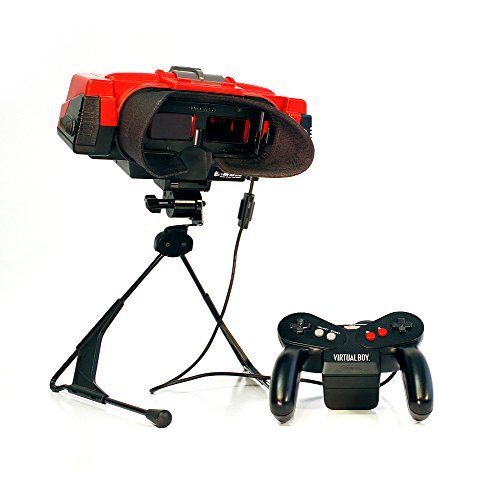
The Nintendo Virtual Boy is an iconic, conversation-starting novelty that shines brightest as a collector display piece and historical curio rather than an everyday marathon gaming platform.
- True 3-D graphics deliver genuine stereoscopic visual depth without requiring an external television monitor.
- Historic 1995 release with a production window under a year creates immense vintage appeal and collector interest.
- Unmistakable monochromatic red and black optical palette provides an iconic retro-futuristic aesthetic.
- Self-contained tabletop console design with integrated tripod stand makes it an ideal decorative centerpiece.
Where to buy
at Amazon Prime
Price taken from the listing on 18 Sep 2026 and it can change at any time. We may earn a commission if you buy through this link.
Pros
- Features true 3-D graphics
- Distinctive monochromatic red and black visual display
- Historic 1995 collector release
- Self-contained tabletop console design
- Iconic conversation piece for retro enthusiasts
Cons
- Discontinued after just under a year
- Monochromatic red and black graphics only
- Listing does not specify included accessories
As Amazon Associates, we earn from qualifying purchases. This means we may receive a small commission at no extra cost to you if you click through and make a purchase.
Shopping for an enthusiastic retro gamer can be challenging when common consoles and modern titles are already in their collection. If you want to surprise someone with a truly memorable video game artifact, standard gift cards rarely spark genuine excitement. The Nintendo Virtual Boy solves this dilemma by offering one of the most eccentric hardware designs in gaming history. Produced in 1995 to explore early stereoscopic visuals, this standalone system was promoted as an early venture into virtual reality. For gift-givers seeking an unforgettable nintendo virtual boy gift idea, this crimson curiosity delivers unmatched historical intrigue, serving as an extraordinary conversation piece for anyone who appreciates classic video game culture.
Our verdict on this distinctive machine is that it excels primarily as a rare collector showcase piece and novelty item rather than an everyday gaming station. Because its commercial run lasted just under a year before being discontinued, surviving hardware represents a fascinating, finite snapshot of experimental engineering. If you are shopping for an accessible, portable family device with a massive game catalog, a modern handheld like the nintendo switch lite is far more practical for everyday play. However, for a dedicated video game historian or shelf collector, this bold apparatus provides historical prestige that modern hardware cannot duplicate.
Nintendo Virtual Boy Features Explained
True 3D Graphics and Depth Illusion
The primary technical highlight noted in the official specifications is that the system features true 3-D graphics. Unlike traditional 1990s home consoles that outputted flat, two-dimensional graphics onto a standard cathode-ray tube television, this platform was engineered to deliver authentic optical depth. The console achieves this dimensional illusion by projecting separate images to each eye through independent viewports inside the visor, creating the visual impression that game layers exist in dimensional space.
This early optical system offers a captivating look at retro innovation, showing how Nintendo tackled virtual reality concepts before modern flat-panel displays existed. While contemporary visual accessories like the viture pro dock offer high-resolution full-color projections, the nintendo virtual boy 3d graphics relied on vibrating mirror assemblies and synchronized LEDs, giving retro fans a rare look into mechanical game engineering.
Monochromatic Red Screen Visual Display
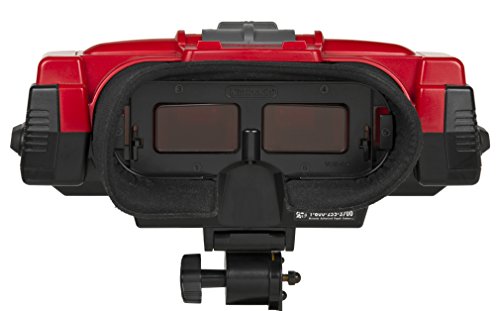
A defining characteristic of this retro machine is its stark monochromatic color palette, which renders all imagery in sharp shades of red against a black background. The console does not display natural color tones, pastels, or greyscales. Instead, every background layer, character sprite, and interface menu is formed entirely through high-contrast red LEDs. When looking into the viewing hood, the nintendo virtual boy red screen produces an unmistakable sci-fi aesthetic distinct from any other consumer console.
Nintendo chose this monochromatic red approach during its mid-1990s development phase because red LEDs were the most practical and responsive components capable of generating fast-refreshing stereoscopic scenes without visual smear. For gift recipients and collectors, this intense red glow produces an immediately recognizable aesthetic that draws curiosity whenever the system is powered on.
Tabletop Console Form Factor
Although casual observers frequently mistake the device for a wearable virtual reality headset, it is officially classified as a nintendo virtual boy tabletop console. Rather than securing to the player’s face with elastic headbands, the main optical housing rests on a dual-legged metal stand. Users position the unit on a flat surface like a desk or table, leaning forward to place their eyes against the cushioned rubber hood while holding the controller with both hands.
This physical architecture makes the console an exceptional exhibition object for vintage collectors. Because it does not require a bulky external television or movement sensors like a family wii sports bundle, the entire self-contained apparatus can be displayed cleanly on a compact shelf or desk as a standalone sculpture representing 1990s hardware design.
Short-Lived 1995 Legacy
The historical background of the nintendo virtual boy retro console is one of the most famous stories in video game manufacturing. Released in 1995, the system was discontinued after just under a year on store shelves, representing one of the briefest production cycles ever for a major gaming manufacturer. Both hardware and software manufacturing ended swiftly, transitioning the system from an active commercial product into an instant historical artifact.
This abbreviated lifecycle is precisely why the nintendo virtual boy for collectors holds such enduring appeal today. Because production halted so quickly, surviving units are far less common than mainstream consoles from the same decade. For retro enthusiasts, owning a genuine VUE-001 console feels like owning a preserved relic from an era of radical hardware experimentation.
Specs
| Brand Name | Nintendo |
|---|---|
| Manufacturer | Nintendo |
| Platform | Virtual Boy |
| Model Number | VUE-001 |
| Manufacturer Part Number | VUESRA01 |
| Original Release Year | 1995 |
| Visual Style | Monochromatic (Red and Black) |
| Graphics Feature | Features true 3-D graphics |
| Resolution | 4K (as listed in product specifications) |
| Universal Product Code (UPC) | 045496750015 |
| Software Update Support | Unknown |
As published by the manufacturer on the Amazon listing.
Buy it if
Best Use Cases
- Displaying as a striking conversation starter and retro sculpture inside a dedicated game room or office.
- Presenting a memorable novelty gift to an experienced retro gamer who already owns mainstream vintage systems.
- Demonstrating early 1990s stereoscopic 3D optical technology and mechanical mirror engineering to retro gaming enthusiasts.
- Curating a complete historical Nintendo hardware collection representing every official platform release.
Think twice if
Before You Buy
If you plan to purchase this vintage console as a gift or for your personal collection, it is essential to understand what the product listing specifies. The listing identifies the console under model number VUE-001 and manufacturer part number VUESRA01, but the listing does not specify what accessories, cables, or packaging components are included in the package. Specifically, the listing does not specify whether the essential dual-legged stand, original controller, battery clip, or AC power adapter are included with the unit, nor does it state whether any game cartridges are bundled. Because these individual components are necessary to play or display the unit, buyers should message the marketplace seller directly to verify what is included in the box before purchasing.
Prospective buyers should also maintain realistic expectations regarding game availability and hardware maintenance. Because console and software production was discontinued after just under a year, the library of official nintendo virtual boy games is notably compact, meaning physical cartridges must be sought through secondary retro collector markets. Furthermore, while the listing states resolution as 4K and lists software update support as unknown, this 1995 console is an entirely offline analog system that does not support internet connections, digital downloads, or firmware updates. Reviewing these nintendo virtual boy specs beforehand ensures you acquire this piece of gaming history with clear expectations.
Bottom Line
Deciding whether this retro curiosity fits your shopping plans depends on viewing it as a historical artifact rather than a modern gaming console. Shoppers wanting an everyday entertainment device with extensive game libraries and family multiplayer will find modern options much more functional. However, if you are wondering is nintendo virtual boy worth it for an avid retro gaming collector, the answer is yes. Its bold industrial form factor, stereoscopic viewing technology, and crimson visual presentation make it one of the most distinctive collector pieces in interactive entertainment history.
As a gift idea, this 1995 tabletop curiosity delivers an exciting unboxing moment that stands apart from standard video game accessories. Its brief commercial run under a single year has cemented its legendary reputation among retro enthusiasts, ensuring that it remains an admired conversation piece for years to come. For anyone passionate about classic gaming milestones, this red-screen curiosity is an unforgettable centerpiece for any collection.
FAQ
Is Nintendo Virtual Boy worth it for collectors?
Yes, the console is an iconic showpiece for retro gaming collectors due to its historical rarity and unique engineering. Because it remained on the market for less than a year following its 1995 launch, finding an original unit adds significant prestige to any classic video game collection.
Does the Nintendo Virtual Boy connect to a television?
No, the console does not connect to a television or external monitor. It is a self-contained tabletop viewing unit featuring internal optical viewports that the player looks into directly through a cushioned visor.
What makes the 3D graphics on the console unique?
The console produces authentic stereoscopic depth by showing separate, synchronized images to each eye through internal optical pathways. Instead of rendering full color, it projects imagery in a monochromatic red and black palette that produces a sharp, high-contrast three-dimensional illusion.
How many games are available for the platform?
Because Nintendo discontinued both hardware and software production after just under a year, the total library of physical cartridges released for the platform is extremely small. This limited catalog makes collecting physical games a focused and achievable pursuit for vintage enthusiasts.
Does the console support internet connectivity or modern software updates?
No, the hardware is a completely offline retro console from 1995 that only runs physical game cartridges. While the product listing lists software update support as unknown, the system has no network connectivity or digital update capability.
Is the console worn on the head like a modern VR headset?
No, the unit is not a wearable headset and lacks head straps. It is built as a tabletop console that sits on an adjustable dual-legged stand, requiring the player to place the unit on a flat desk or table and lean into the visor.
Where to buy
at Amazon Prime
Price taken from the listing on 18 Sep 2026 and it can change at any time. We may earn a commission if you buy through this link.
More Gaming
See the section


Get our picks by email
New reviews and the prices we spotted, once a week.