SawStop 10-Inch 1.75 HP Cabinet vs SawStop 3 HP Cabinet Saw: Spec Comparison
Compare the SawStop 10-inch 1.75 HP cabinet vs 3 HP cabinet saw by published specs. See how motor power affects cuts through dense hardwoods in 2026.
By GaugeKit Editorial Team 6 min read
As Amazon Associates, we earn from qualifying purchases. This means we may receive a small commission at no extra cost to you if you click through and make a purchase.
As an Amazon Associate we earn from qualifying purchases. Links on this page are affiliate links.
This comparison of the sawstop 10 inch 1 75 hp cabinet vs 3 hp cabinet saw helps you choose the right tool. Both models share the brand’s patented safety system and a 36-inch T-Glide fence. They also both use 10-inch blades and black finishes. The main difference is motor power. One offers 1.75 HP, while the other provides 3 HP. You need to weigh this power gap against size and weight to decide which fits your workshop.
Motor Power
1.75 HP
3 HP
Fence System
T-Glide
Professional T-Glide Advance
Blade Diameter
10-Inch
10-Inch
Weight
471 pounds
not listed
Length
39.1 inches
69.1 inches
Width
33 inches
31.1 inches
Choose the first if
- You need a more compact footprint for a smaller shop
- You prefer a lighter machine that is easier to move
- You want a lower horsepower motor for general use
Choose the second if
- You require maximum cutting power for dense materials
- You want the upgraded T-Glide Advance fence system
- You have ample floor space for a larger saw
Verdict
The 1.75 HP model suits those with limited space or lower power needs. The 3 HP version is better for users demanding higher performance and the advanced fence. Choose based on your available floor space and torque requirements.
SawStop Cabinet Saw Spec Comparison
Motor Power
Edge: SawStop 3 HP Cabinet Saw with 36-Inch Fence
The SawStop 3 HP Cabinet Saw features a 3 HP motor, providing significantly more power than the 1.75 HP motor in the SawStop 10-Inch 1.75 HP Cabinet Saw. Higher horsepower generally allows for smoother cuts through dense hardwoods and thicker materials without bogging down. You get nearly double the rotational force with the 3 HP model. This makes the larger saw better for heavy-duty production work or thick stock. The 1.75 HP unit is sufficient for general woodworking but may struggle with demanding cuts. If you frequently process large volumes of material, the extra power in the 3 HP model is a clear advantage.
Footprint and Size
Edge: Tie
These saws have very different physical footprints. The 3 HP model is much longer, measuring 69.1 inches in length, while the 1.75 HP model is 39.1 inches long. Both share a similar width of around 31 to 33 inches and a height of 34 inches. The longer length of the 3 HP unit likely accommodates the extension table and rail system. You need more floor space for the 3 HP saw. The 1.75 HP model is more compact, fitting better in smaller shops. If space is limited, the smaller footprint of the 1.75 HP version is preferable. For maximum outfeed support, the longer 3 HP saw wins.
Blade Diameter
Edge: Tie
Both saws use a 10-inch blade diameter. This is the standard size for cabinet saws, ensuring compatibility with a wide range of aftermarket blades. You can use the same blades in either machine without modification. This spec does not differentiate the two products. It means your existing blade inventory works for both. The cutting height potential is similar for standard 10-inch blades. Since the blade size is identical, this feature offers no advantage to either model. It is a common baseline for this category of professional cabinet saws. You should focus on motor power and fence quality instead.
Fence System
Edge: Tie
Both saws include a 36-inch T-Glide fence system, which is a key feature for precision rip cuts. The 1.75 HP model lists the T-Glide Fence System, while the 3 HP model specifies the Professional T-Glide Advance Rip Fence. Both are made of heavy-gauge steel for stability. The Advance version on the 3 HP model may offer enhanced features, but both provide reliable square cutting. The 36-inch rip capacity is consistent across both configurations. You get long rip cuts with either saw. The fence quality is a strong point for both. This aspect is essentially a tie, as both utilize the brand's proprietary rail system for accuracy.
Weight and Stability
Edge: SawStop 10-Inch 1.75 HP Cabinet Saw with 36-Inch Fence
The SawStop 10-Inch 1.75 HP Cabinet Saw weighs 471 pounds. The weight of the 3 HP model is not listed in the provided data. Heavier saws generally vibrate less and stay more stable during cuts. The 471-pound mass of the 1.75 HP model suggests a robust cast-iron construction. You benefit from reduced chatter and improved cut quality with such mass. Without the weight spec for the 3 HP saw, we cannot confirm if it is heavier or lighter. However, both are cabinet saws designed for stability. The 1.75 HP model has a confirmed heavy build. This is a slight edge for the 1.75 HP model due to verified data.
Choose Your SawStop Cabinet Saw
Need maximum power for dense hardwoods
Our pick: SawStop 3 HP Cabinet Saw with 36-Inch Fence
The 3 HP motor delivers significantly more torque than the 1.75 HP unit. This extra power ensures smoother cuts through thick or dense materials without bogging down. If your work involves heavy stock removal or continuous demanding cuts, the higher horsepower rating provides the necessary performance and reliability for professional results.
Want proven precision and stability
Our pick: SawStop 10-Inch 1.75 HP Cabinet Saw with 36-Inch Fence
This model highlights a trunnion and arbor built for precision and stability. It features a gas piston elevation for smooth adjustability and table flatness measured at a maximum 0.010-inch gap. The heavy-gauge steel fence ensures square cutting without deflection. If you prioritize verified mechanical accuracy and established build quality, this spec-focused choice suits you.
Prioritize safety and dust management
Our pick: SawStop 10-Inch 1.75 HP Cabinet Saw with 36-Inch Fence
Both saws stop the blade in under 5 milliseconds upon skin contact. However, this model explicitly details advanced shrouding for below-table dust collection and an available overarm system routing dust to a 4-inch port. The control box constantly checks system reliability. If integrated safety monitoring and specific dust collection pathways are key to your workflow, these specs matter.
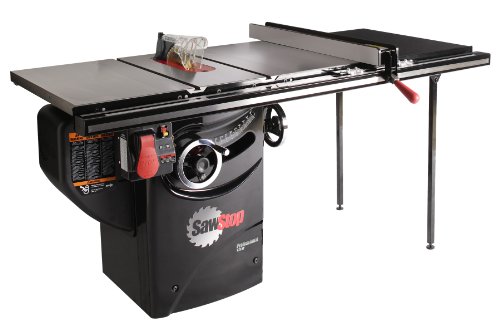
SawStop 10-Inch 1.75 HP Cabinet Saw with 36-Inch Fence
Best for: precision cutting and safety-focused workshops
- Blade Diameter
- 10-Inch
- Motor Power
- 1.75-HP
- Fence System
- T-Glide
- Dimensions
- 39.1 × 33 × 34 inches
- Weight
- 471 pounds
This 471-pound cabinet saw delivers 1.75 HP of power through a 10-inch blade. It features a 36-inch T-Glide fence for reliable square cuts and a patented safety system that stops the blade in under 5 milliseconds. The trunnion and arbor are built for precision, with table flatness measured at a maximum 0.010-inch gap. It suits users who prioritize safety and precision over maximum motor power.
- 1.75 HP motor provides reliable cutting power.
- 36-inch T-Glide fence ensures stable, square cuts.
- Safety system stops blade in under 5 milliseconds.
- Table flatness is within 0.010-inch diagonal gap.
- 1.75 HP motor is less powerful than the 3 HP option.
- 471-pound weight makes it difficult to move.
- You value the patented safety system for shop protection.
- You need a 36-inch fence for ripping wide stock.
- You prefer precision-built trunnions and arbor components.
- You require the maximum 3 HP cutting speed.
- You need a lighter saw for frequent relocation.
- You want a smaller footprint for tight spaces.
Verdict: SawStop 1.75 HP 10-Inch Cabinet Saw offers essential safety and precision for serious woodworkers. It fits those who prioritize blade protection and fence stability over raw horsepower.

SawStop 3 HP Cabinet Saw with 36-Inch Fence
Best for: Wide stock cutting and high-power needs
- Rip Capacity
- 36 in
- Motor Power
- 3 HP
- Fence System
- Professional T-Glide Advance
- Dimensions
- 69.1 × 31.1 × 34 inches
This is the 3 HP cabinet saw model from SawStop. It features a 36-inch rip capacity and a Professional T-Glide Advance fence system. The unit measures 69.1 inches wide and 34 inches high. It includes the SawStop safety system to stop on skin contact. You should choose this if you need maximum power and a wide cutting range for professional cabinet work.
- 3 HP motor provides high power output
- 36-inch rip capacity handles wide stock
- Professional T-Glide Advance fence ensures accuracy
- SawStop safety system stops on skin contact
- 3 HP motor is heavier than the 1.75 HP alternative
- 69.1-inch width requires more floor space
- 34-inch height may be tall for some users
- You need a 36-inch rip capacity for wide boards
- You want the highest motor power in the lineup
- You have space for a large 69-inch footprint
- You prefer a lighter 1.75 HP motor
- You have limited workshop floor space
- You need a smaller footprint under 60 inches
Verdict: SawStop 3 HP Professional Cabinet Saw suits shops needing maximum power and a 36-inch cutting range. It fits users who prioritize capacity over compact size.
Specifications side by side
| Spec | SawStop 10-Inch 1.75 HP Cabinet Saw with 36-Inch Fence | SawStop 3 HP Cabinet Saw with 36-Inch Fence |
|---|---|---|
| Blade Diameter | 10-Inch | – |
| Rip Capacity | – | 36 in |
| Motor Power | 1.75-HP | 3 HP |
| Fence System | T-Glide | Professional T-Glide Advance |
| Horsepower | 1.75 HP | 3 HP |
| Dimensions | 39.1 × 33 × 34 inches | 69.1 × 31.1 × 34 inches |
| Weight | 471 pounds | – |
| Color | Black | Black |
| Model | PCS175TGP236 | PCS31230-ATGP36 |
Frequently asked questions
Which SawStop cabinet saw is better for precision cutting?
The SawStop 10-Inch 1.75 HP Cabinet Saw is better for precision cutting. It is designed for workshops that prioritize blade protection and fence stability. The 36-inch fence provides a stable platform for accurate cuts. This model fits users who value safety features and precise operation over raw horsepower.
What is the main difference in motor power between these two saws?
The main difference is the motor output. The 3 HP Cabinet Saw has a 3 HP motor, while the other model has a 1.75 HP motor. The higher horsepower in the 3 HP unit allows for smoother cuts through dense hardwoods. It prevents the blade from bogging down during heavy cuts.
How do the physical dimensions of these saws compare?
The 3 HP Cabinet Saw is significantly longer. It measures 69.1 inches in length and 31.1 inches in width. The 1.75 HP model is more compact at 39.1 inches long and 33 inches wide. Both saws share the same height of 34 inches. The larger footprint of the 3 HP unit supports wider stock cutting.
Do both saws come with a 36-inch fence?
Yes, both models include a 36-inch T-Glide fence. This fence provides a wide cutting range for both tools. The fence stability is a key feature for serious woodworkers. It ensures consistent alignment during use. You get the same fence capability regardless of which horsepower model you choose.
Which saw is heavier and better for a permanent workshop?
The SawStop 10-Inch 1.75 HP Cabinet Saw is heavier. It weighs 471 pounds. The 3 HP model does not list a weight in the provided data. The substantial weight of the 1.75 HP unit helps reduce vibration. This makes it a stable choice for a permanent workshop setup.
Can the 1.75 HP saw handle wide stock cutting?
The 1.75 HP saw is best for precision cutting and safety-focused workshops. The 3 HP Cabinet Saw is specifically suited for wide stock cutting. It offers maximum power and a large cutting range. If your work involves wide materials, the 3 HP model is the more suitable choice.
What blade size do these cabinet saws use?
Both saws use a 10-inch blade. The SawStop 10-Inch 1.75 HP Cabinet Saw explicitly lists this blade diameter. The 3 HP model also operates with a 10-inch blade. This standard size ensures compatibility with common blades. You can use the same blades for both machines.
See also
Where to buy
at Amazon
Price taken from the listing when this page was written and it can change at any time. We may earn a commission if you buy through this link.
More Table Saws
See the section


Get our picks by email
New reviews and the prices we spotted, once a week.